

„Stronger Youth” – Empowering young people social competences and soft skills through peer mentoring”
This project will be the input to the first stage of prevention by empowering youngsters by the most suitable channel of communication: through their peers. The main aim of the project is to support organizsation the peer mentoring process by providing methods for prospecting volunteers among resilient youngsters and offer them tools for working with, and support their peers that are at risk of depression or social exclusion
Project objectives
- setting up the framework of communication with youngsters – providing the on-line tool for recruiting resilient youngsters who can be volunteers.
- creating a set of activities that can be provided by peer mentors to mentees in such a way that common activities will develop and improve social resilience by learning and training soft skills and social competences.
- providing the know-how for educators on how to work with youngsters who can become peer mentors as volunteers
Target groups
- Despite the impression that the most important target group are young people at risk of depressive behavior, the authors of the project strongly emphasize that the main target group are teenagers. It is important to understand that the project is aimed at young people who, thanks to cooperation, are to realize the idea of inclusion through peer self-help. Therefore, the recipients are both young people exposed to depressive factors and those who, thanks to their social and mental resilience, can get involved in the prevention of depression among young people. The activation assumed by the project is to concern both groups of young people, both parties must cooperate and create, nurture, share and disseminate common values in order to achieve the project’s goals.
- The second group of recipients are educators: professionals from all institutions dealing with youth. The process of peer mentoring requires introduction and professional monitoring. However, it has to be participatory monitoring, not meddling. An additional, indirect group of recipients are all stakeholders: decision-makers of the educational process, school teachers, parents of adolescents. The implementation of the project will make it possible to understand communication processes and reach the generation particularly exposed to the dangerous factors of the modern world.
Results
- Methodology along with the complete set of tools to conduct the process of peer mentoring in order to prevent depressive behaviors and social exclusion among young people.
- On-line skill assessment tool that examines social and communication skills and gives the feedback in order to become a mentor or to improve,
- Guide for educators on how to supervise the mentoring process, Set of activities for mentors and mentees for common doing that will develop social and psychical resilience
Added value
The project directly refers to what is very important in a world
where a huge number of values from different cultures are mixed: it gives the opportunity to establish and strengthen relationships between people, starting with the young generation, which is particularly exposed to growing up in a sense of isolation and loneliness. The diversity of partners will allow for a wide application of the methodology and project results in many fields. Each of the partners will equally use the effects of joint effort for the benefit of the community that is Europe, working with the young generation on whom the future of the European Union will depend.
Planned activities:
A conference will be held in each partner country to disseminate the project results.
Project duration:
December 2023 – November 2025

More Information:
Project coordinator
PRISM Impresa Sociale S.R.L.
Italy
Project partners

Fundacja Rozwoju Aktywności Międzynarodowej i Edukacyjnej – FRAME
Poland

VITALE TECNOLOGIE COMUNICAZIONE – VITECO SRL
Italy
UNIVERSIDADE DE EVORA
Portugal
CENTRUL PENTRU PROMOVAREA INVATARII
Romania
Pelican Language School
The Czech Republic
Asociación Valencia Inno Hub
Spain
Contact the project supervisor
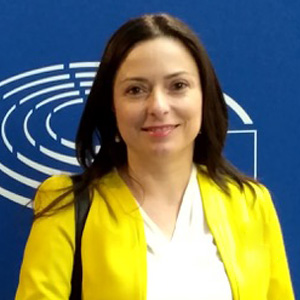
Marta Kędzia
mkedzia(at)euframe.eu
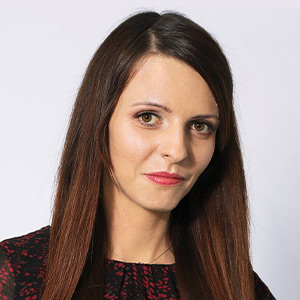
Katarzyna Kasznicka
kkasznicka(at)euframe.eu
Adam Gogacz
adam(at)gogacz.eu